Thursday, July 23, 2026

Top story

The NumbersAI News

AMD to invest up to $5 billion in Anthropic under AI infrastructure deal

AMD is making a major strategic bet on Anthropic's compute future, signaling confidence in the startup's scaling trajectory while securing long-term accelerator demand. This structures a multi-year, multi-billion dollar commitment that ties chip supplier to frontier AI lab.

AMD investing up to $5B in Anthropic

The briefs

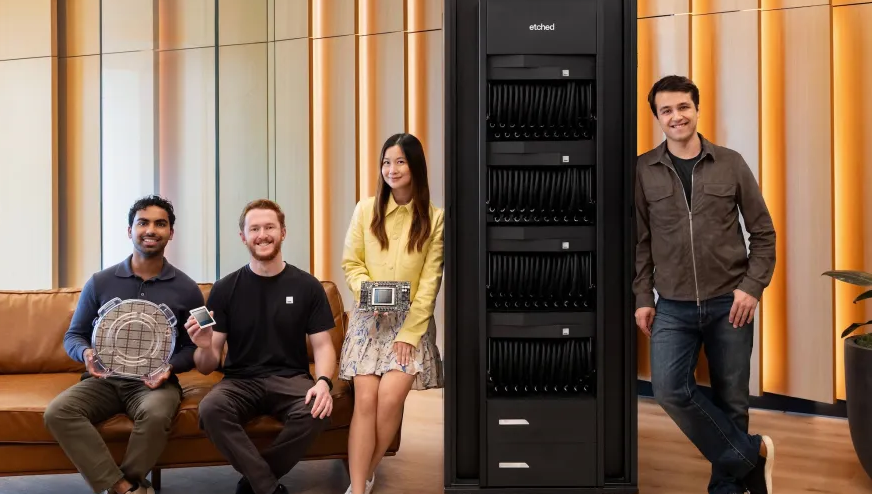
Etched's valuation more than doubled in Series C, signaling institutional confidence in specialized AI inference silicon as a critical alternative to general-purpose chips. This validates the thesis that custom silicon for inference workloads—not just training—is a defensible business.

Etched raised $300M Series C

Embodied AI and robotics models are data-starved. Ropedia is capitalizing on the infrastructure gap by building the human-centric data collection layer that every physical AI company needs but can't build alone.

Ropedia raised $22M in Pre-Series A funding

AMD is making a direct infrastructure play against Nvidia with next-gen AI chips designed for frontier models and agentic workloads. This is a hardware capability announcement that will shape enterprise AI procurement decisions.

AMD Instinct MI400 Series GPUs announced

OpenAI is expanding ChatGPT into regulated healthcare despite immediate legal challenges, signaling aggressive product momentum but raising governance and liability questions for AI companies entering high-stakes domains.

Health in ChatGPT launched with Apple Health data integration and medical records connectivity

As AI compute demand consistently outpaces supply, hyperscalers are architecting multi-chip strategies (GPUs, CPUs, custom silicon) to de-risk vendor dependency and maximize infrastructure flexibility. This signals a fundamental shift in how cloud providers are building competitive moats.

Microsoft and AMD targeting silicon diversity strategy for Azure

AMD's rack-scale hardware and software strategy (Helios, Instinct, ROCm.ai, EPYC) directly challenges Nvidia's GPU dominance in AI infrastructure. This matters to founders and investors because GPU supplier concentration risk is eroding—and customer deployment plans signal real traction beyond announcements.

AMD launches Helios (rack-scale system)

Pichai's public commitment to larger base models signals Google's competitive response in the model capability arms race. Combined with Alphabet's $205B 2026 capex forecast, this reveals the scale of compute investment required to stay competitive with frontier labs.

Alphabet raising 2026 investment forecast to $205 billion

Poolside demonstrates that efficient training (agentic reasoning, self-correction) can outperform scale in coding tasks. This challenges the 'bigger = better' narrative and has immediate implications for inference cost economics and open-weight model viability.

Laguna S 2.1 is third coding model released in three months

A critical vulnerability in OpenAI's Agent Builder exposes how autonomous agents can be weaponized to bypass security controls and steal enterprise access. This is the first major agent-layer exploit and signals that AI security posture in enterprises is dangerously behind the threat curve.

Vulnerability: 'AgentForger' discovered by Zenity Labs